Today, learning and development teams are expected to create experiences that are not only accessible and scalable, but also engaging, memorable, and connected to real performance.
But there is a difference between making a course interactive and simply making learners click more. The next wave of educational innovation is not about adding more buttons, pop-ups, or badges. It is about designing learning experiences where every interaction has a purpose, every challenge supports a real outcome, and every tool, from gamification to AI, helps learners think, decide, practice, and apply.
Summary
- The future of learning is moving beyond passive eLearning and toward more intentional, blended, and performance-driven experiences.
- Interactivity, gamification, and AI can transform learning, but only when they are grounded in clear objectives and meaningful learner decisions.
- For learning specialists, the real opportunity is to design experiences that are not just engaging, but effective, memorable, and transferable to the real world.
From clicks to meaningful learner decisions
One of the biggest mistakes in digital learning is confusing interactivity with activity. A learner clicking ten buttons to reveal ten blocks of text is technically interacting, but that does not mean they are learning.
Effective interactivity starts with a simple question: why does this action matter?
Every click, reveal, drag-and-drop, challenge, or scenario should help the learner understand something, make a decision, practice a skill, or move closer to the learning objective.
This is especially relevant as learning teams continue to use more interactive platforms and authoring tools. The goal is to create moments of agency, where learners actively participate in the experience and understand why their choices matter.
In other words: the future of interactive learning is about better decisions.

“At the end of the day, we’re not really looking for the clicks rather than we’re looking for meaningful decisions happening by the learner.” – Moe Ash
Blended learning is becoming more strategic
The pandemic accelerated the shift to online learning, but it also revealed the limits of fully virtual, passive experiences. Many learners, from students to corporate teams, experienced digital fatigue. As a result, the conversation has moved beyond a simple choice between self-paced learning and facilitator-led training. The future is blended.
But blended learning should not be treated as a buzzword. A strong blended experience requires a clear strategy around four key elements: pace, path, place, and time.
Learning teams need to define what happens synchronously, what happens asynchronously, where learners engage with content, how they move through the journey, and how each stage supports the next.
A well-designed blended experience can combine:
- self-paced modules
- live sessions
- microlearning
- reflection
- reinforcement
- community activities
- collaborative challenges.
Done well, it does not just deliver content. It creates momentum.
“Always ask the question, why am I having them do this?” Dr. Rachel Arpin
Gamification needs to support performance, not just engagement
Gamification can make learning more engaging, but engagement alone is not enough. Points, badges, rewards, and playful elements may create short-term motivation, but they do not automatically lead to long-term behavior change.
The real question is: “Can learners apply what they practiced when it matters?”
Game-based learning works best when the game mechanics are connected to the desired outcome. A puzzle, challenge, or simulation should not exist just to entertain. It should help learners think critically, make decisions, experience consequences, receive feedback, and try again. That is where learning becomes sticky.
The most effective learning games create safe spaces to fail, reflect, and improve. They help learners practice in ways that resemble real-world performance. And most importantly, they make the transition from the learning environment to the job easier.
Learning design comes first. The game comes second.
We’re not here to do games. We’re here to do learning – Moe Ash.
AI is a powerful tool, but the creator still matters
AI is quickly becoming part of the learning design workflow. It can help generate ideas, create prototypes, support content production, and speed up the development of interactive learning materials. For L&D teams working under pressure, this can be a major advantage.
But AI does not replace instructional strategy.
The creator still needs to define the objective, understand the learner, shape the experience, review the output, and make design decisions. AI can accelerate production, but it cannot decide what effective learning looks like on its own.
This is where the role of the learning professional becomes even more important. Prompting matters, but so do learning science, user experience, visual design, accessibility, cultural context, and performance goals. Without that human expertise, AI can produce content that looks polished but fails to support real learning.
What learning specialists should take away
- Blended learning should have a strategy.
- Gamification should support performance.
- AI should amplify the creator, not replace them.
The future of learning will not be defined by more content, more clicks, or more automation. It will be defined by better experiences: experiences that help people understand, practice, decide, remember, and perform.
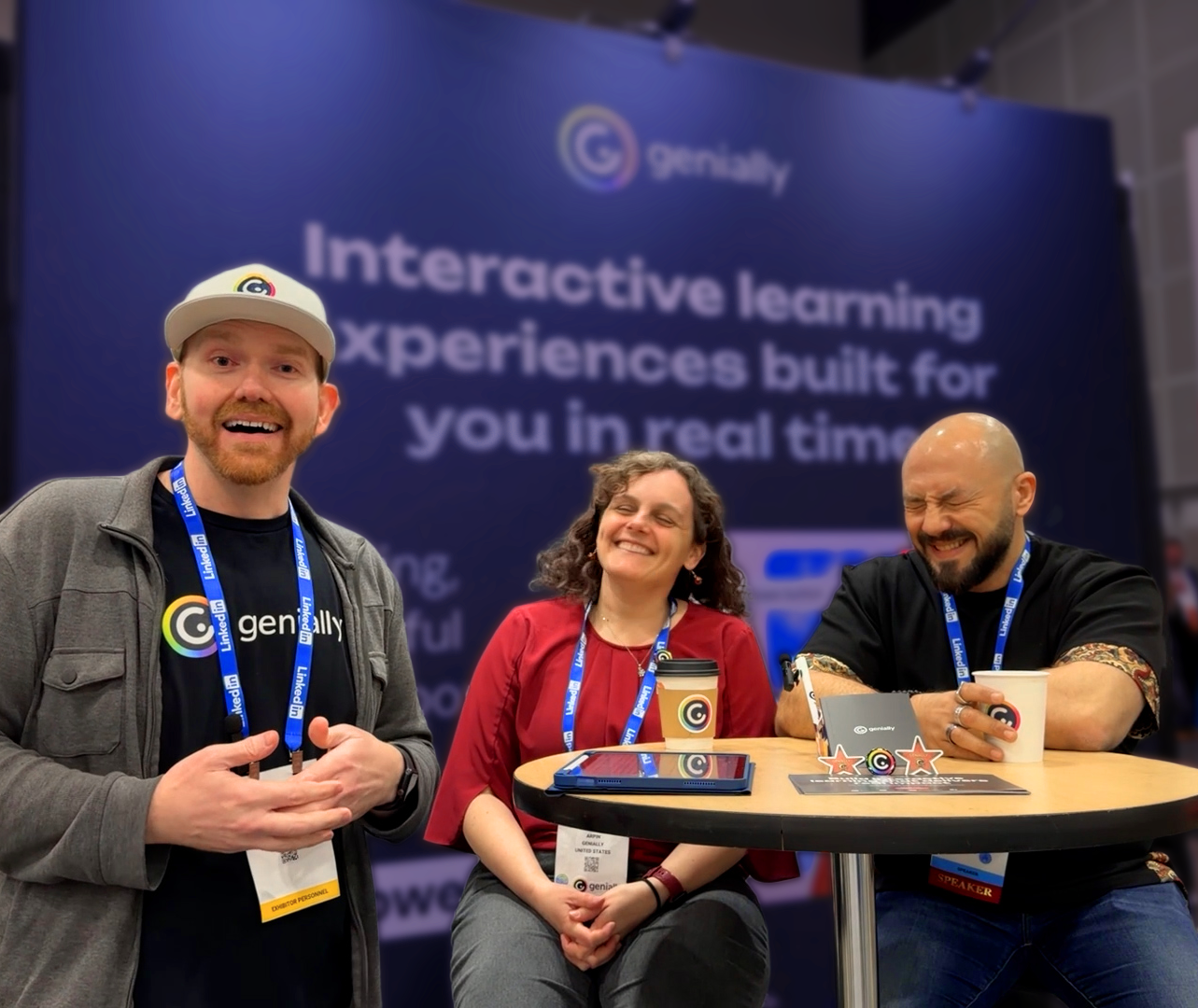
For more insights, watch the Anti-Boring Learning Lab video with James Flaskamp, Moe Ash, and Dr. Rachel Arpin, where they explore these ideas in more detail and discuss how learning specialists can create more engaging, effective, and meaningful digital learning experiences.